ラボール英会話教室.png)
Of course, you all know what Setsubun is. But have you ever tried to explain it to someone in English? Below is the main information about the history of Setsubun, what happens, and why. After you read this, why not try to explain it in your own words? [Hint: You could always ask ChatGPT or similar to write a simple English description of Setsubun , or any other Japanese event, for you. It’s a great way to practice English!]
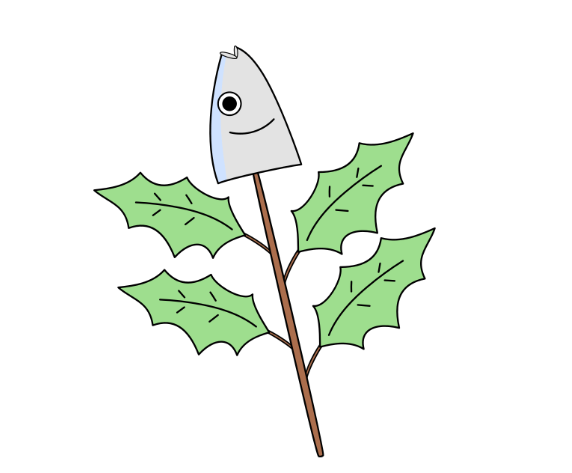
By the way, if you are going to describe any Japanese event, festival, or food, and so on, it’s good to use some Japanese words for special things, and then add the English meaning. This is more interesting for the listener. It is also useful if you can explain the purpose. For example, “at Setsubun, some people hang a Hiiragi iwashi, a grilled sardine head with holly, next to their front door. Demons cannot enter the house because of the bad smell of the sardine, and the sharp points of the holly leaves, which blind the demon.”
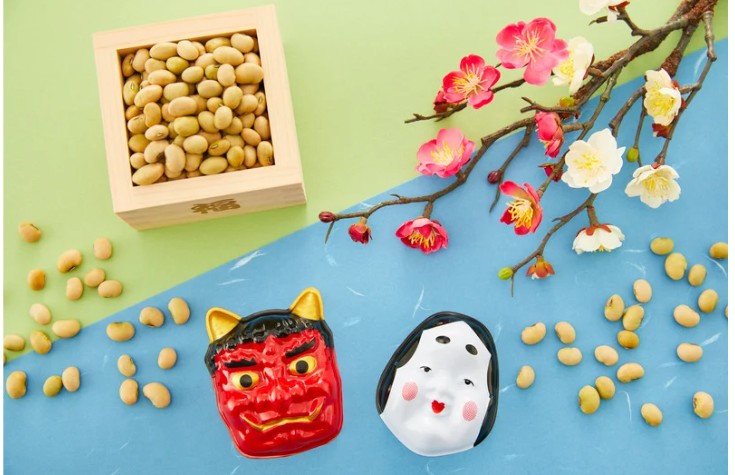
Here is a description of Setsubun and what I do:
Setsubun (節分) is a traditional Japanese event. It usually happens on February 3rd or 4th, just before the start of spring. In the old Japanese calendar, Setsubun meant the change of seasons, but today it is mainly connected with the beginning of spring. Many people in Japan celebrate it at home, at schools, and at temples. In England we don’t really have anything like this for the start of spring.
Anyway, the main idea of Setsubun is to drive away bad luck and welcome good luck. People believe that evil spirits, called oni (demons), bring sickness and trouble. On Setsubun, many people do special activities to make the oni go away and invite good fortune into their homes.
One famous Setsubun activity is mamemaki, which means “bean throwing.” People throw roasted soybeans while saying, “Oni wa soto! Fuku wa uchi!” This means, “Demons out! Good luck in!” Usually, one person in the family wears an oni mask and pretends to be a demon. Other family members throw beans at them and laugh. This activity is fun, especially for children. When my son was young, we did this once or twice, but it was too much trouble picking up the beans afterwards!
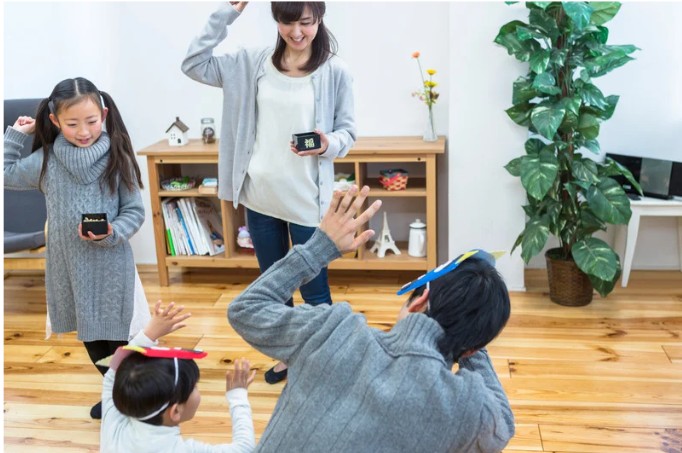
After throwing the beans, people often eat the same number of beans as their age. Some people eat one extra bean for good luck. It is believed that this will bring health and happiness for the coming year. I’ve only done this once – with peanuts – I couldn’t eat so many beans!
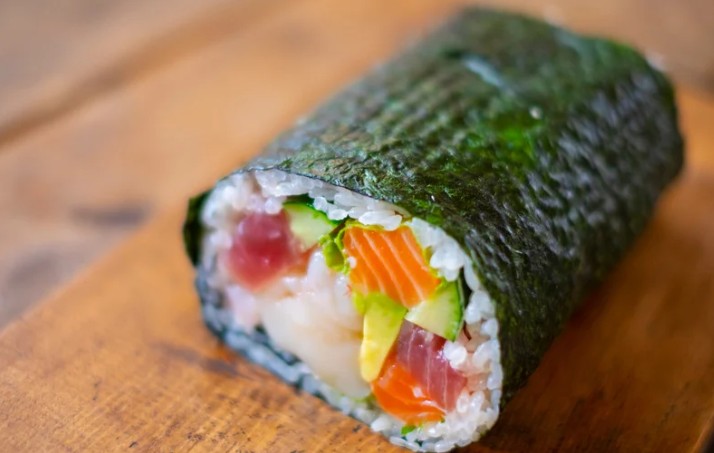
Another important part of Setsubun is eating ehōmaki. This is the best part of Setsubun for me. Ehōmaki is a long sushi roll with rice, seaweed, and several fillings. On Setsubun night, we eat the roll while facing a special lucky direction, called ehō. This direction changes every year. You have to try to eat the whole roll silently, without talking, to make your wish come true. In my house we always make our own ehōmaki. Sometimes we put in strange things, like spicy chicken or Mexican fillings. Always tasty!
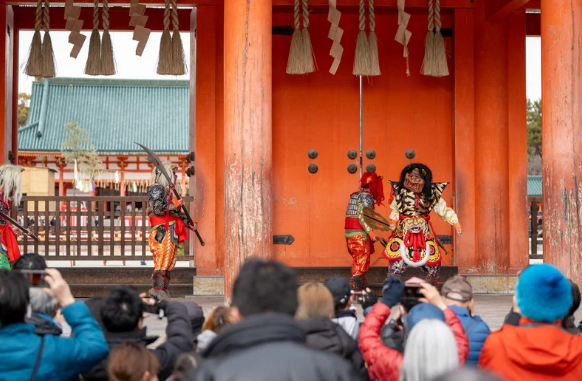
Many temples and shrines also have Setsubun events. Famous people, such as actors or sumo wrestlers, sometimes throw beans to large crowds. People gather to catch the beans because they believe the beans will bring good luck. Actually, I’ve only been one time because the crowds are so big. It was interesting for the experience, but I don’t need to go again.
Anyway, Setsubun is not a national holiday, but it is an important cultural event. It mixes fun, food, and old beliefs. Today, many Japanese people enjoy Setsubun as a time to think about the new season and hope for a healthy and happy year. As for me, it’s an excuse to eat something different – I like Setsubun for the ehōmaki. How about you? Do you buy ehōmaki or make them, or do you do nothing special?